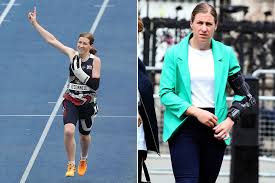
A former soldier turned gold medal-winning para-athlete is facing the possibility of prison after being accused of exaggerating her disability in a £2.4 million compensation claim against the Ministry of Defence (MoD).
Debbie O’Connell, 37, suffered four fractures to her collarbone in 2015 after falling from a horse while training with the Royal Horse Artillery’s ceremonial unit, the King’s Troop. She later claimed the injury left her left arm almost unusable. After leaving the Army, she went on to build a successful para-athletics career, winning gold medals in cycling at the Invictus Games.
In September 2018, O’Connell filed a £2.4 million damages claim against the MoD, which was later reduced to £1.74 million. However, the claim was dismissed last year by the High Court on grounds of “fundamental dishonesty.”
Judge Christopher Kennedy KC ruled that her claims of ongoing pain “must be dishonest,” citing surveillance footage that showed her carrying out activities such as leading a horse and chopping vegetables. She was subsequently ordered to pay more than £200,000 in legal costs.
The case returned to court last week after the MoD sought to have her committed to prison for contempt of court, alleging she misled the court about the severity of her condition during the compensation proceedings.
A different judge, Mr Justice Coppel, permitted the contempt application to proceed, stating it was in the “public interest” where claims had been pursued on a false basis, as previously determined in this case.
During the original trial, O’Connell said she had experienced chronic pain in her left arm and shoulder following the accident, which led to her discharge from the forces two years later. She argued that the fall occurred because she was given riding boots two sizes too large and assigned a horse known to buck.
The MoD contested her claims, alleging she had overstated her injuries while competing in the T46 para-athletics classification, designated for athletes with limb impairments comparable to a unilateral above-elbow amputation.
Counsel for the MoD, Niazi Fetto KC, argued that she had dishonestly pursued a para-athletics career despite not meeting the criteria for the T46 category. Covert footage presented in court showed her using her injured arm in routine tasks, including handling a horse and preparing food.
O’Connell denied any wrongdoing, telling the court she accurately described her condition during classification assessments and was placed in the category accordingly. She said her military training taught her to endure pain and that she was striving to rebuild her life after her injury.
At the 2018 Invictus Games in Sydney, she won two gold and two silver medals and later competed in sprinting and CrossFit events.
In his earlier ruling, Judge Kennedy noted that as recently as 2022 she reported needing assistance with everyday tasks such as cutting food, making hot drinks, bathing, and dressing.
However, he observed that footage showed her displaying “normal or near normal function” in her left arm and shoulder, contradicting her claims of severe and ongoing impairment.
He concluded: “This is a claim which I have found to be fundamentally dishonest. The claimant has persisted with her dishonesty over a long period. She has sought to engage others and her attempts to conceal the truth have been sophisticated.”
At last week’s hearing, MoD lawyers argued that there was a clear public interest in pursuing contempt proceedings, which carry a maximum sentence of two years in prison.