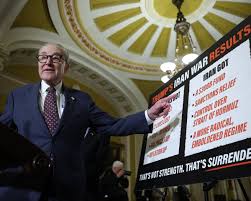
The United States Senate on Tuesday, June 23, approved a concurrent resolution calling on the president to withdraw American military forces from the conflict with Iran, marking a notable bipartisan challenge to President Donald Trump’s military policy and signaling growing congressional opposition to continued involvement in the crisis.
Democrats in Congress have repeatedly pushed legislation in both chambers aimed at limiting the president’s authority to engage in military action without congressional approval. In recent weeks, those efforts have attracted support from a small number of Republicans, drawing criticism from the White House.
Republican Senators Rand Paul, Susan Collins, Lisa Murkowski, and Bill Cassidy joined Democrats in backing the resolution, while Democratic Senator John Fetterman voted against it. The measure passed the Senate by a narrow 50-48 margin.
The resolution had already been approved by the House of Representatives earlier this month. However, because it is a concurrent resolution rather than a bill, it does not require presidential approval and does not have the force of law.
Even so, supporters argue that the measure carries significant political weight. A Democratic aide involved in drafting the resolution said its backers view it as a strong expression of congressional intent, although any questions about enforcement would likely be left to the courts.
The vote was the Senate’s 10th consideration of an Iran-related war powers measure this year. A similar proposal advanced through procedural stages last month, but leadership postponed a final vote while seeking enough support to secure passage.
The House version passed by a 215-208 vote, with four Republicans joining Democrats. Those lawmakers were subsequently criticized by President Trump, who used social media to accuse them of undermining national interests.
Supporters of the resolution, including Senator Tim Kaine, maintain that Congress must reassert its constitutional role in decisions involving military action. Kaine argued that the current period of relative calm and ongoing diplomatic engagement with Tehran presents an opportunity for lawmakers to ensure that any future escalation receives congressional authorization.