The United States on Tuesday revoked a temporary sanctions waiver that had allowed Iran to continue limited oil exports, following attacks on three commercial tankers in the Strait of Hormuz that Washington linked to Tehran.
The move marks a sharp escalation in economic pressure on Iran despite ongoing negotiations between the two countries aimed at easing regional tensions and reaching a broader diplomatic agreement.
The US Treasury Department announced the cancellation of a special operating license introduced in June, which had permitted Iran to extract, market and transport crude oil and other petroleum products until August 21.
“Iran’s actions in the Strait were wholly unacceptable to the United States and will be met with consequences,” a US official told AFP.
The official, who spoke on condition of anonymity, said the broader US-Iran memorandum of understanding remains conditional on Iran’s conduct. According to the official, Tehran will only receive economic incentives if it demonstrates continued cooperation, although Washington remains committed to pursuing a lasting diplomatic solution.
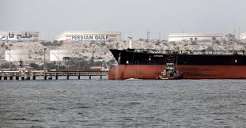
The latest tensions follow attacks on three commercial vessels near the coast of Oman. The United Kingdom Maritime Trade Operations (UKMTO) agency reported that an unidentified projectile struck one tanker overnight, triggering a fire onboard. Two other vessels were hit shortly afterwards, with one of the attacks confirmed to have involved a drone.
The incidents occurred amid growing disagreements over maritime traffic through the Strait of Hormuz. Oman recently proposed a temporary shipping corridor within its territorial waters as an alternative route, a plan Iran has strongly opposed while seeking to impose transit fees on vessels using the strategic waterway.
Qatar confirmed that one of the damaged ships was its liquefied natural gas carrier, Al-Rekayyat, and directly blamed Iran for the attack. Doha condemned the incident as a serious threat to international maritime navigation and summoned Iran’s deputy ambassador to demand an explanation and call for an end to actions that undermine regional stability.
“We hold Iran fully legally responsible for this attack and for any resulting damages or repercussions,” Qatar’s foreign ministry spokesman, Majed Al Ansari, wrote on X.
Iran rejected the accusations, with state news agency IRNA describing Qatar’s allegations as unacceptable.
The attacks ended more than a week of relative calm in the Gulf after Iran had eased restrictions on shipping under a fragile ceasefire reached with the United States. News of the strikes pushed global crude oil prices up by more than two percent as traders reacted to renewed concerns over energy supplies and the future of US-Iran negotiations.
Security analyst Andreas Krieg of King’s College London said the attacks appeared intended to discourage commercial vessels from using Oman’s proposed transit route.
“We are now in a sensitive period where potential alternatives to an Iranian toll or fee system are being explored,” Krieg told AFP. “Iran is sending a clear signal that no alternative will be accepted.”
He added that the reported drone and projectile attacks appeared to target vessels attempting to bypass Iranian oversight, describing the incidents as violations of international maritime law and the terms of the existing ceasefire.
Commercial shipping had only recently begun returning to normal operations after Washington and Tehran signed a preliminary memorandum of understanding. However, Iranian officials have repeatedly insisted that the Strait of Hormuz will no longer operate under the previous system of unrestricted international passage.
Under the 14-point memorandum, Iran and Oman, which share control of the strategic chokepoint, are expected to work with neighbouring Gulf states to develop a revised framework governing maritime administration and services in the waterway.
Qatar, which had initially stayed out of mediation efforts during heightened regional hostilities, has recently taken on a more active diplomatic role, hosting the latest round of indirect talks between US and Iranian officials last week.