 Amebo Nation
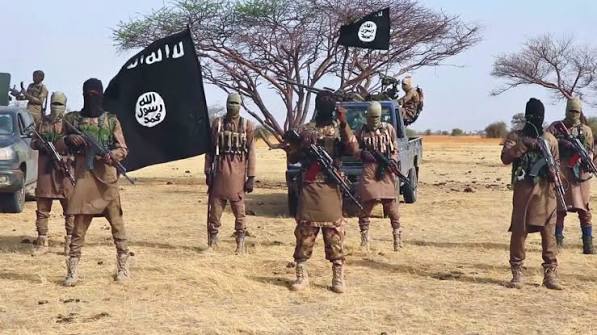
The Islamic State West Africa Province (ISWAP) has developed an increasingly sophisticated technology network involving armed drones, satellite communications and international financial channels, according to a new security report published on Thursday, November 26, 2026.
The report, authored by Taiwo Adebayo of the Institute for Security Studies (ISS), revealed that the terrorist group has been adapting commercial and civilian technologies for intelligence gathering, propaganda and combat operations in Nigeria.
The findings were based on interviews with 17 informants conducted between April and September 2026. Those interviewed included former ISWAP fighters, security and intelligence personnel, civilians and researchers.
Nigeria has battled an insurgency since 2009, with armed groups continuously adapting their tactics, equipment and operational strategies.
According to the study, ISWAP operates supply networks linked to Lagos, Kano and Dubai, while currency exchange operators allegedly facilitate financial transactions and the purchase of equipment.
The report warned that the group’s connections to legitimate commercial activities make it difficult for authorities to identify and disrupt its supply channels.
“The network often intersects with legal economies, making isolation and targeting difficult for government,” the report stated.
The study also identified a payment arrangement known as “ghanimah”, through which fighters reportedly receive financial rewards for weapons captured during raids and handed over to the group’s leadership.
“This points to a key motivational variable, other than ideology, for the frequent attacks on military positions,” the report added.
On its technological capabilities, the report disclosed that ISWAP had moved beyond using drones solely for surveillance and had begun deploying commercially available models fitted with improvised explosives in repeated attacks on military positions in northeastern Nigeria.
It further attributed some of the group’s technical capabilities to its connections with the Islamic State’s central leadership, which reportedly provides technical training, funding and media infrastructure.
These links, the report noted, have given ISWAP an operational advantage over its rival, Boko Haram. The group broke away from Boko Haram in 2016 following leadership disagreements and ideological differences.
The researchers urged Nigerian and regional authorities to strengthen security at military bases, improve counter-drone capabilities and disrupt the financial and supply networks supporting the insurgents.
They also recommended greater use of intelligence provided by former insurgents to help security agencies understand the group’s operations.
The latest findings are similar to a separate report published in July 2026, which disclosed that armed extremist groups in Nigeria had increasingly institutionalised the use of artificial intelligence for activities ranging from battlefield planning to explosives production.