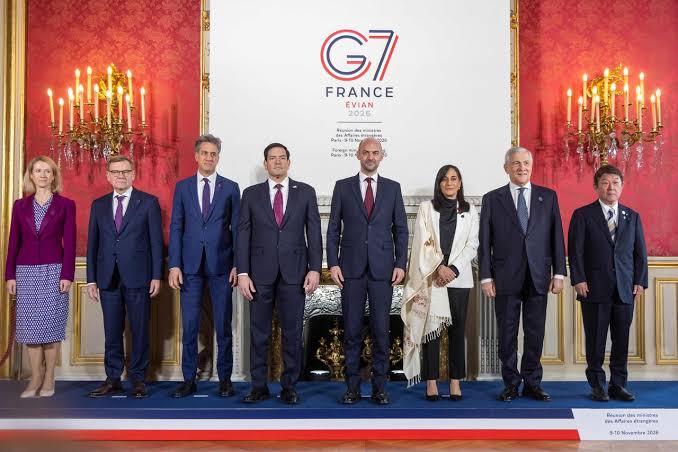
The country’s Foreign Ministry announced the measures on the sidelines of the G7 meeting in Paris, stating that they were aimed at “disrupting Iranian financial networks supporting its nuclear program”.
The 11 entities had previously been removed from Canada’s sanctions list in 2016 after international nuclear inspectors reported that Iran had taken steps to fulfil its obligations under the 2015 nuclear agreement.
The affected organisations include the Nuclear Fuel Production and Procurement Company, Nuclear Reactors Fuel Company, Kala Naft, Naftiran Intertrade Company, National Iranian Oil Company, National Iranian Tanker Company, Bank Mellat, Bank Melli Iran, Bank of Industry and Mine, Export Development Bank of Iran and Iran Insurance Company.
The sanctions were reinstated under Canada’s Special Economic Measures (Iran) Regulations. According to Ottawa, the measures are designed to further restrict Iran’s access to sensitive technologies and financial resources.
Under the regulations, individuals and organisations in Canada, as well as Canadian citizens abroad, are prohibited from engaging in specified financial and property transactions involving the sanctioned entities.
Canada initially introduced sanctions under the regulations in July 2010, working alongside international partners, including the United States and the European Union, over concerns about Iran’s failure to meet its international nuclear obligations.
Iran, as a non-nuclear-weapon state under the Treaty on the Non-Proliferation of Nuclear Weapons, is required not to develop or acquire nuclear weapons.
In July 2015, China, France, Germany, Russia, the United Kingdom and the United States, alongside the European Union, reached a nuclear agreement with Iran known as the Joint Comprehensive Plan of Action (JCPOA).
The agreement, endorsed through United Nations Security Council Resolution 2231, placed restrictions on Iran’s nuclear programme and expanded monitoring by the International Atomic Energy Agency (IAEA) in exchange for sanctions relief.
In January 2016, the IAEA confirmed that Iran had permitted verification activities and taken steps to limit its nuclear programme in accordance with the agreement. Canada subsequently eased its sanctions the following month, removing the 11 entities from its blacklist.
However, tensions over Iran’s nuclear activities intensified in June 2025 when the IAEA Board of Governors found that Tehran was not complying with its safeguards obligations and called on the country to cooperate fully with international inspectors.
The following month, after Israeli and US attacks on Iran, Tehran suspended cooperation with the IAEA, further limiting the agency’s ability to monitor and verify the country’s nuclear activities.
In August 2025, France, Germany and the United Kingdom triggered the JCPOA’s snapback mechanism, citing Iran’s production of highly enriched uranium and its inadequate cooperation with nuclear inspectors.
The move resulted in the reintroduction of United Nations nuclear-related sanctions against Iran in September 2025. Canada subsequently amended its separate regulations implementing UN sanctions to reflect the measures.
More recently, in June 2026, the G7 reiterated that Iran must not develop or acquire nuclear weapons, calling for restrictions on uranium enrichment and effective international monitoring by the IAEA.