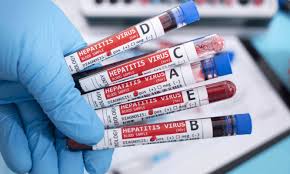
The World Health Organization (WHO) has revealed that Nigeria and nine other countries accounted for the majority of global hepatitis-related deaths in 2024.
In its 2026 Global Hepatitis Report, the WHO stated that hepatitis B and C—responsible for about 95 percent of hepatitis deaths—claimed roughly 1.34 million lives in 2024, with an estimated 1.8 million new infections occurring each year.
The report identified Bangladesh, China, Ethiopia, Ghana, India, Indonesia, Nigeria, the Philippines, South Africa, and Vietnam as countries responsible for 69 percent of hepatitis B-related deaths worldwide. Nigeria also ranked among the leading contributors to hepatitis C deaths, alongside China, India, Pakistan, Russia, and the United States.
Globally, about 287 million people were living with chronic hepatitis B or C infections in 2024. The WHO noted that Africa accounted for 68 percent of new hepatitis B infections, yet only 17 percent of newborns in the region received the recommended birth-dose vaccine.
The report further highlighted that people who inject drugs accounted for 44 percent of new hepatitis C infections, emphasizing the need for stronger harm-reduction strategies and safer injection practices.
Despite the scale of the problem, the WHO said there has been some progress. Since 2015, new hepatitis B infections have declined by 32 percent, while deaths from hepatitis C have dropped by 12 percent. The prevalence of hepatitis B among children under five has also fallen to 0.6 percent, with several countries meeting key global targets.
WHO Director-General Tedros Adhanom Ghebreyesus noted that while eliminating hepatitis is achievable, progress remains uneven and too slow to meet the 2030 targets.
The organization is urging governments to step up efforts by expanding vaccination coverage, improving access to testing and treatment, strengthening injection safety, and integrating hepatitis services into primary healthcare systems.