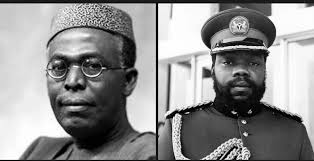
Former Nigerian Head of State, Yakubu Gowon, has revisited some of the most sensitive episodes of the Nigerian Civil War, revealing how late nationalist leader Obafemi Awolowo once intervened to stop late military ruler Murtala Mohammed from losing his command during the conflict.
The disclosures were made in Gowon’s autobiography, My Life of Duty & Allegiance, where he reflected on military operations, tensions among commanders, and political decisions that shaped the 1967–1970 civil war.
One of the incidents highlighted in the memoir was the failed federal military attempt to cross the River Niger into Onitsha. Gowon described the mission as highly risky from the outset.
“As the Commander-in-Chief, I considered the plan almost suicidal,” he wrote.
According to Gowon, military headquarters had warned that Biafran troops could blow up the bridge and trap federal soldiers during the operation. However, he claimed Murtala pushed ahead partly because of his rivalry with another military commander, Colonel Shuwa.
“His pride did not allow him to pass through the 1 Division area because of his rivalry with Colonel Shuwa,” Gowon stated.
The former Head of State said he advised Murtala to approach Onitsha through routes already secured by federal troops, but the advice was ignored.
“Murtala went ahead with his plan to cross the River Niger using boats and barges, but the operation ended in catastrophe, with heavy losses of men and equipment,” he recalled.
Despite the failed mission, Gowon praised Murtala’s courage on the battlefield, describing the operation as evidence of his bravery as a field commander.
Gowon also disclosed that their relationship became severely strained after Murtala allegedly sent him a disrespectful message from the war front.
“In anger, he sent me an impertinent signal telling me to get my fat butt off my chair and come sort things out on the battlefield instead of giving orders from the comfort of Dodan Barracks,” Gowon wrote.
He admitted the message infuriated him so much that he considered removing Murtala from command immediately.
However, Gowon said Awolowo intervened before any action was taken.
“Chief Awolowo noticed how angry I was and quickly pleaded with me not to react the way I intended,” he wrote.
According to Gowon, the shortage of experienced military officers during the war eventually influenced his decision to overlook Murtala’s conduct and allow him to remain in command.
The memoir also revisited the final days of the war and the escape of late Biafran leader Chukwuemeka Odumegwu Ojukwu into exile.
Gowon insisted that despite the intensity of the conflict, he never desired Ojukwu’s death outside the battlefield.
“I always thank God we never captured him during the war. But kill him? Never, except in battle where survival depends on who gets the first shot,” he stated.
He dismissed claims that the federal government fought the war out of personal hatred for Ojukwu, maintaining that the primary objective was preserving Nigeria’s unity.
“There were people who wanted him completely crushed, but I believed there had to be a future after the war,” Gowon noted.
He explained that this belief later shaped the federal government’s famous “No Victor, No Vanquished” policy declared after the war ended in January 1970.
“We needed reconciliation, reconstruction, and rehabilitation. That was the only path for Nigeria to move forward,” he wrote.