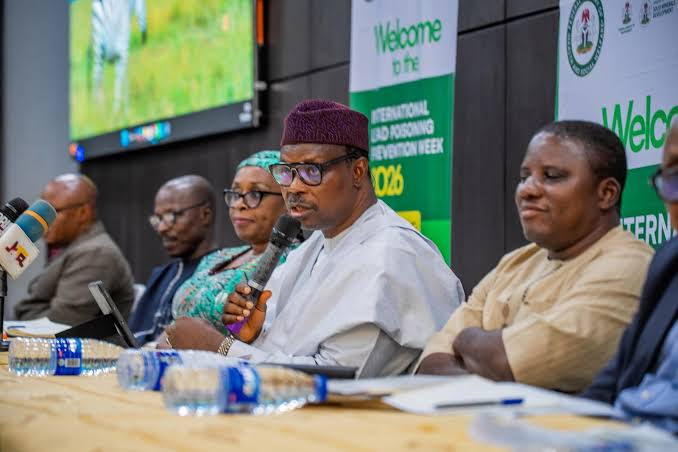
The Minister of State for Health and Social Welfare, Iziaq Salako, disclosed this on Wednesday in Abuja during the 2026 International Lead Poisoning Prevention Week. He warned that children, pregnant women and women of childbearing age were particularly vulnerable to lead exposure, which can cause serious health complications even when symptoms are not immediately apparent.
“We cannot treat our way out of lead poisoning; we must prevent exposure wherever possible,” Salako said.
The minister also inaugurated Nigeria’s Five-Year Strategic Plan on Lead Poisoning Elimination (2026–2030), aimed at reducing exposure to lead and safeguarding public health.
He identified contaminated soil, unsafe water pipes, lead-based paints, toys, certain cosmetics, pottery and traditional remedies as potential sources of exposure.
Salako urged Nigerians to maintain good hygiene, clean children’s toys regularly and take precautions when handling materials that may contain lead.
Also speaking at the event, UNICEF consultant Sarah Ango warned that no level of lead exposure is safe for children, describing lead poisoning as a preventable threat to their health and development.