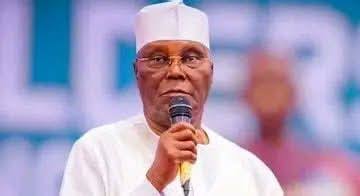
African Democratic Congress (ADC) presidential candidate Atiku Abubakar has called on President Bola Tinubu to account for Nigeria’s ₦166.79 trillion public debt before proceeding with plans to secure a fresh $1.5 billion loan from the World Bank.
Atiku accused the Tinubu administration of repeatedly imposing economic sacrifices on Nigerians while continuing to increase the country’s borrowing.
In a statement issued by Phrank Shaibu, Director of Strategic Communications for the ADC Presidential Campaign Council, Atiku said, “With public debt at ₦166.79 trillion, President Tinubu is now seeking another $1.5 billion from the World Bank. The President must first account for the money already borrowed.”
He described the administration’s economic record as evidence of what he considers poor financial management, arguing that Nigerians are facing rising food, fuel and electricity costs even as public debt continues to grow.
“Nigerians were promised that painful policies would free resources for development. They have felt the pain. Where is the development?” Atiku asked.
He also claimed that if Nigeria’s public debt were shared equally among the population, each citizen’s share would amount to ₦716,822, compared with ₦383,442 three years ago — representing an 87 percent increase.
“President Tinubu has made today difficult and tomorrow more uncertain. He cannot keep loading debt onto the country and expect Nigerians to applaud programme titles. What has this government built? Who has benefited? Why should Nigerians trust him with another term in office?” Atiku said.
On the proposed $1.5 billion World Bank facilities, which are expected to support climate resilience, social protection and early childhood development, Atiku said the stated objectives of the programmes should be accompanied by greater transparency over existing and new borrowing.
He called on the Federal Government to publish details of the projects to be financed, the communities and citizens expected to benefit, programme targets, loan terms, disbursement arrangements and timelines for implementation.
According to Atiku, climate resilience initiatives should produce clearly identifiable outcomes, including land restoration, irrigation projects and flood protection, while social protection programmes should specify beneficiaries and timelines for assistance.
He also said early childhood development programmes should be assessed through measurable improvements in nutrition, healthcare and learning outcomes.
Atiku further questioned the government’s continued reliance on foreign borrowing despite its claims of increased statutory revenue and savings resulting from the removal of the petrol subsidy.
“If more money is coming in, why does the debt keep climbing? If Nigerians have sacrificed so much, where are the results? A government cannot keep announcing savings, signing loans, and asking the same struggling families to wait for relief,” the former vice president said.