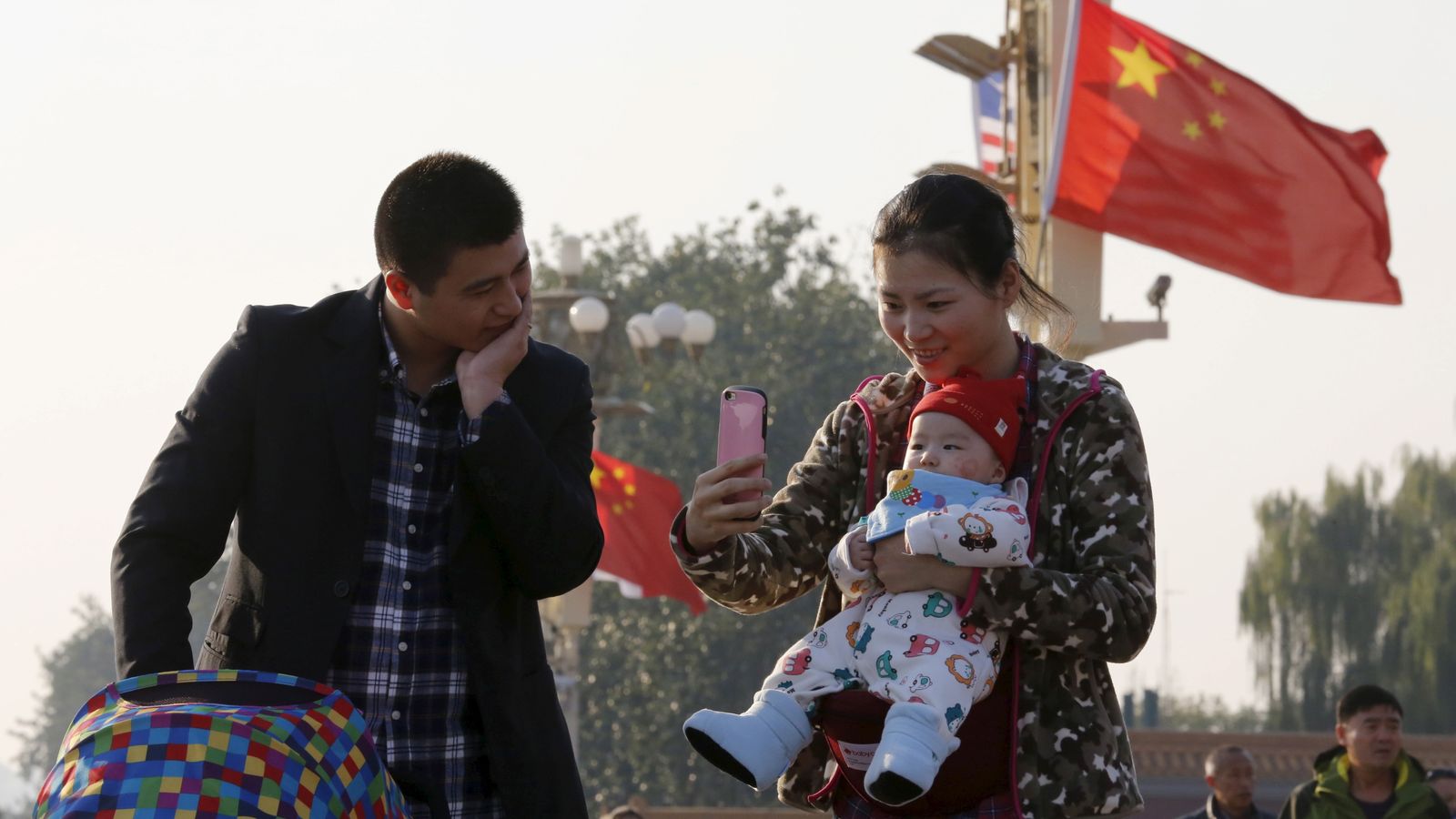
China is set to impose a tax on contraception for the first time in more than 30 years as the government looks for ways to reverse the country’s declining birth rate.
Under newly released tax regulations, contraceptive drugs and products; including condoms will lose their exemption from China’s 13% value-added tax starting January 1, 2026.
The move comes amid a sharp drop in births. According to China’s National Bureau of Statistics, 9.5 million babies were born in 2024, down by about one-third from 14.7 million in 2019. With deaths now exceeding births, China lost its status as the world’s most populous country to India in 2023.
The policy shift has sparked widespread ridicule on Chinese social media, where many users argue that the cost of raising a child far outweighs any increase in the price of contraception.
“That’s a really ruthless move,” said Hu Lingling, a mother of a five-year-old who says she has no intention of having another child. “I’ll lead the way in abstinence as a form of protest,” she joked, calling the policy “hilarious,” particularly in light of China’s past use of forced abortions during the family-planning era.
Public health experts have also raised concerns that higher contraceptive costs could lead to more unplanned pregnancies and a rise in sexually transmitted diseases.
For decades, China’s Communist Party tightly controlled population growth through the one-child policy, enforced from around 1980 to 2015 through fines and other penalties. In some cases, women were subjected to forced abortions, and children born outside the policy were denied household registration, effectively stripping them of legal status.
As demographic pressures shifted, the government raised the birth limit to two children in 2015 and to three children in 2021. During this time, contraception was actively promoted and often provided free of charge. The new tax marks a clear departure from that approach, signaling an effort to discourage the use of birth control.
Qian Cai, director of the University of Virginia’s Demographics Research Group, warned that the tax could disproportionately affect low-income populations. “Higher prices may reduce access to contraceptives among economically disadvantaged groups, potentially leading to more unintended pregnancies and sexually transmitted infections,” she said, adding that this could result in higher abortion rates and increased health-care costs.
However, Cai said the policy is unlikely to significantly change family-planning decisions. “For couples who do not want children or do not want additional children, a 13% tax on contraceptives is unlikely to outweigh the much higher costs of raising a child,” she said.
Yi Fuxian, a senior scientist at the University of Wisconsin–Madison, defended the move as consistent with China’s changing priorities. “They once tried to control population growth, and now they want to encourage births,” he said. “Taxing these products simply returns them to the status of ordinary consumer goods.”
Despite the policy shift, many analysts remain skeptical that taxing contraception will have any meaningful impact on China’s deep-rooted demographic challenges.