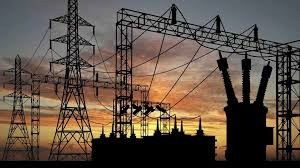
The Nigerian Independent System Operator (NISO), a unit of the Transmission Company of Nigeria (TCN), has attributed the national grid collapse recorded earlier on Friday to the simultaneous tripping of multiple 330kV transmission lines and the disconnection of several grid-connected power generation units.
In a statement issued on Friday, January 23, via its official social media platforms, NISO said operational reports confirmed that the combined incidents triggered the system disturbance that resulted in the grid failure.
The operator said restoration activities began at about 1:15pm in line with established grid recovery and restoration procedures.
“As of the time of this update, power supply has been successfully restored to Abuja, Osogbo, Benin, Onitsha, Sapele, Jebba, Kainji, Shiroro and parts of Lagos, while restoration efforts are progressing across other parts of the country,” the statement said.
NISO added that a comprehensive investigation is under way to determine the root and contributory causes of the disturbance.
Data from the system operator showed gradual improvement in power generation as restoration continues. At the time of filing this report, seven generating companies were contributing a combined total of 1,118.80 megawatts to the national grid.
Distribution load allocation also showed signs of recovery, with the 11 electricity distribution companies (DisCos) collectively allocated 1,540MW.
Ikeja DisCo recorded the highest allocation at 350MW, followed by Abuja DisCo with 270MW. Ibadan DisCo received 240MW, while Eko DisCo was allocated 200MW.
Port Harcourt DisCo had no allocation at the time of reporting, recording 0.00MW. Yola and Jos DisCos received the lowest allocations at 30MW each. Enugu DisCo was allocated 100MW, Benin DisCo 70MW, Kano DisCo 100MW and Kaduna DisCo 150MW.
NISO said restoration efforts would continue until full stability is restored to the national grid.