A powerful 7.3-magnitude earthquake struck off the southern coast of Mexico on Friday, July 17, triggering a tsunami alert for parts of the Pacific coastline and causing panic across southern Mexico and neighbouring Central American countries.
According to the United States Geological Survey (USGS), the earthquake occurred about 48 kilometres off the coast of Aquiles Serdán, Mexico, at a depth of approximately 18 kilometres.
Mexico’s National Seismological Service later recorded more than 30 aftershocks, the strongest measuring magnitude 6.8. Following the quake, the U.S. National Oceanic and Atmospheric Administration (NOAA) issued a tsunami threat alert, prompting authorities to urge residents to stay away from beaches as a precaution.
The earthquake was strongly felt in the Mexican states of Chiapas and Oaxaca, as well as in neighbouring Guatemala and El Salvador. As of the time of reporting, no deaths or injuries had been confirmed.
In Tuxtla Gutiérrez, the capital of Chiapas State, residents fled buildings in panic as the tremor shook the city.
Mexican President Claudia Sheinbaum said she had spoken with the governors of the affected states to assess the situation, while Navy Secretary Raymundo Morales said preliminary assessments indicated there were no major impacts, adding that there were “no serious effects.”
In Guatemala City, authorities evacuated several buildings and suspended classes in communities near the Mexican border because of the earthquake’s intensity.
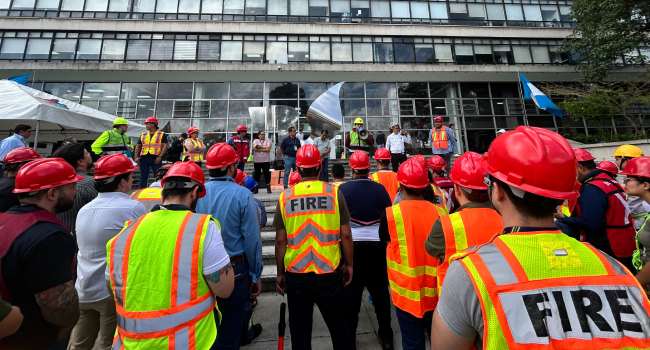
Although Mexico City is located more than 800 kilometres from the epicentre, some residents reported feeling the tremor, leading to precautionary evacuations from several high-rise buildings.
Mexico and much of Central America lie along active tectonic plate boundaries, making the region one of the most seismically active and earthquake-prone areas in the world.