United States President Donald Trump on Saturday, September 26, rejected a truce proposal from Iran that sought to reopen the Strait of Hormuz to maritime traffic within seven days.
The strategic waterway, which is critical to global energy supplies, remains at the centre of the prolonged conflict between Washington and Tehran, which has reached a stalemate after nearly seven months.
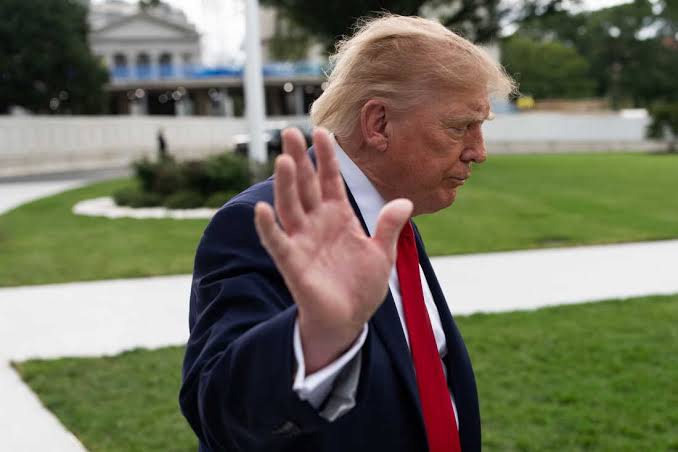
“I reject their proposal,” Trump told reporters outside the White House. He said Iran was seeking an agreement to reopen the strait immediately because of the pressure it was facing, adding that while he was open to making a deal, he had rejected the proposal put forward by Tehran.
Iranian President Masoud Pezeshkian, speaking on his return to Tehran after attending the United Nations General Assembly in New York, said the proposal had been developed in coordination with Supreme Leader Mojtaba Khamenei.
Iranian Foreign Minister Abbas Araghchi, who held indirect talks with US envoy Steve Witkoff earlier in the week, said the proposed framework called for an immediate cessation of hostilities across the Middle East, including in Lebanon.
The proposal also revived terms contained in an earlier memorandum of understanding between the two countries. These included the release of an estimated $12 billion in frozen Iranian assets, the lifting of sanctions on Iranian crude oil exports and the termination of the US naval blockade.
Under the proposal, Iran would fully reopen the Strait of Hormuz on the seventh day of the truce. Pezeshkian said implementation would begin immediately if Washington accepted the terms.
The crisis also featured prominently during UN proceedings in New York. Saudi Arabia’s Foreign Minister, Faisal bin Farhan, criticized the international community over the disruption of key maritime routes.
“The kingdom rejects any party’s use of these vital passages as a tool for pressure, threat, or harm to the interests of states,” bin Farhan said, stressing the waterway’s importance to global energy security.
Russian Foreign Minister Sergei Lavrov said Moscow was prepared to play a constructive role in efforts to stabilize the region.
Meanwhile, Pezeshkian met with UN Secretary-General António Guterres and reiterated that Tehran remained open to diplomacy but lacked trust in Washington following previous breakdowns in negotiations.
Araghchi confirmed that the proposal had been formally conveyed to the United States through Qatari intermediaries.
“The choice now rests with the United States,” Araghchi said. “Iran does not accept coercion, threats, or intimidation, and Iran will not surrender its sovereign rights under pressure.”
Following Washington’s rejection, reports indicated that Trump remained skeptical that Iran would meet US demands and expected military operations to resume. Trump also shared an image on his Truth Social platform showing a map of the Strait of Hormuz labelled “Trump Strait.”
Responding to the development, Revolutionary Guard Corps spokesperson Hossein Mohebi said Tehran would maintain military pressure until all seven of Iran’s conditions were met.