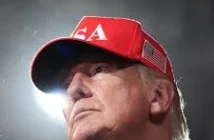
U.S. President Donald Trump has revealed that he cautioned Israeli Prime Minister Benjamin Netanyahu against launching strikes on Iran’s gas infrastructure, as tensions escalate over attacks on energy facilities.
Speaking from the Oval Office, Trump said he personally advised Netanyahu to avoid targeting Iran’s gas fields. “I did. I told him, don’t do that, and he won’t do that,” he stated.
He noted that although the United States and Israel work closely together, they do not always agree on every action. “We get along great. It’s coordinated, but sometimes he’ll do something, and if I don’t like it… and so we’re not doing that anymore,” Trump added.
Earlier, Trump had claimed on social media that he was unaware of Israel’s strike on Iran’s South Pars gas field. The attack has unsettled global energy markets, prompting Iran to retaliate by hitting energy sites in Qatar.
Despite Trump’s statement, U.S. officials indicated that Washington had prior knowledge of the planned strike, although it did not participate in the operation.
The situation is unfolding amid an ongoing conflict that began on February 28 and has continued to drive fluctuations in global oil prices.
Trump has previously emphasized that the United States is avoiding direct strikes on Iran’s energy infrastructure, even as rising oil prices reflect the growing instability.
However, he warned that the U.S. could respond forcefully if Iran continues its attacks, suggesting that the South Pars field could be heavily targeted if Tehran does not stop striking sites in Qatar.
Iran has issued a strong warning in response, saying it would exercise “zero restraint” if its energy facilities come under attack again.
Trump maintains that the broader goal of the conflict is to stop Iran from developing nuclear weapons and to weaken its missile and naval strength, though he has provided few specifics about the long-term plan.
Uncertainty remains over how long the conflict will last and its wider economic consequences, particularly as global energy markets continue to face volatility.