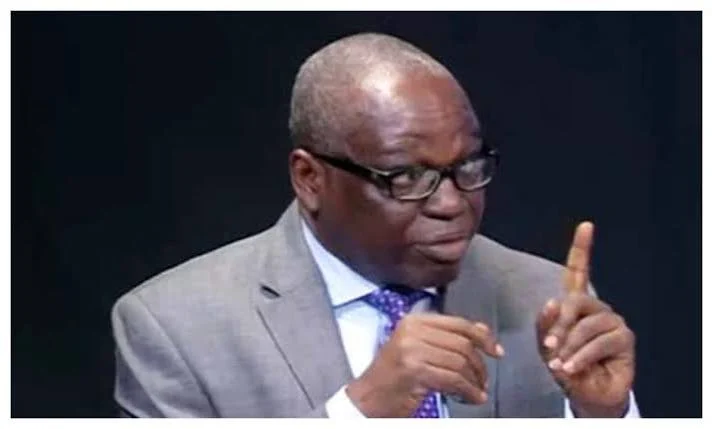
Speaking during an interview on Arise Television, Osaze-Uzzi questioned the circumstances surrounding the reported entries, insisting that INEC’s technological systems should prevent multiple registrations and other anomalies.
He noted that the requirements for voter registration are clearly outlined by law, stressing that only Nigerian citizens aged 18 and above are eligible to register.
“The work ordinarily ought to be easier for the commission. The law is quite clear about who is entitled to be on the register: you’re a Nigerian citizen, you’re 18 years and above, and then you go there, and you register. It’s as simple as that,” he said.
The former INEC official also highlighted the requirement for prospective voters to appear physically for registration and undergo biometric data capture, questioning how such a large number of questionable records could have bypassed the commission’s security measures.
“You must turn up physically for the registration. So it should be a straightforward, simple process. But Nigeria, being what it is, the simpler it is, the more complex things, issues, and challenges arise from those things.
“I don’t know how up to 1.5 million entries can be made in the register. You’ve heard of AI. You’ve heard of multiple registrants. That ought not to be with things that have been put in place by the commission,” he added.
Osaze-Uzzi further observed that INEC had yet to explain the specific period covered by its database review or disclose how the questionable records were initially identified.
He acknowledged that technological tools, including the Automated Fingerprint Identification System (AFIS) and artificial intelligence, could help detect duplicate registrations and eliminate irregular entries.
However, he insisted that the commission must provide a clear and transparent explanation of how the disputed records found their way into the voter register despite the safeguards designed to prevent such occurrences.