 Amebo Nation
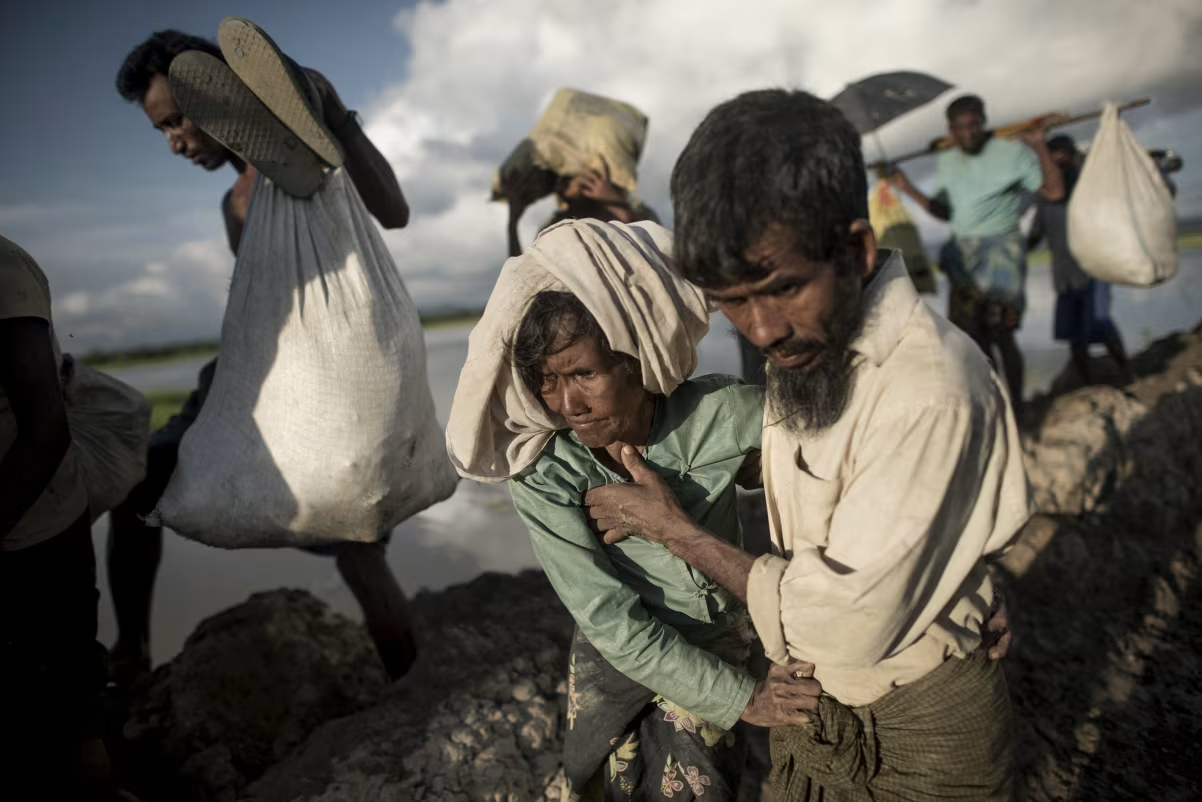
The International Court of Justice (ICJ) has ruled that Myanmar committed genocide against its Rohingya Muslim minority during the military crackdown in 2017.
The landmark judgment was delivered on Thursday, November 19, 2026, by the United Nations’ highest court, which found Myanmar responsible for genocide in northern Rakhine State, where security forces were accused of carrying out mass killings, widespread sexual violence and other atrocities against the minority population.
The ruling followed a case instituted by The Gambia in 2019, accusing Myanmar of violating the 1948 Genocide Convention through its military operations against the Rohingya community.
The court reached its decision by a 9-6 majority, marking the first time in its 80-year history that it has found a state responsible for committing genocide.
The 2017 military crackdown left thousands of Rohingya dead and forced more than 700,000 people to flee Buddhist-majority Myanmar, formerly known as Burma, into neighbouring Bangladesh.
Myanmar had repeatedly denied the allegations, maintaining that its military operations were targeted at armed militants responsible for attacks on security installations.
However, the ICJ concluded that “genocidal intent is the only reasonable inference that can be drawn from the evidence” presented before it.
The violence escalated after fighters from the Arakan Rohingya Salvation Army (ARSA) launched deadly attacks on more than 30 police posts in Rakhine State. Myanmar’s military, reportedly supported by local Buddhist mobs, subsequently launched operations that triggered a mass displacement of Rohingya Muslims.
Survivors and eyewitnesses described horrific incidents, including the destruction of entire villages, mass killings of civilians and the rape and abuse of women and girls by military personnel.
The ICJ determined that approximately 10,000 Rohingya were violently killed during the military clearance operations, while more than 700,000 fled to Bangladesh by land and sea. An estimated 815,000 people were reportedly targeted in one way or another.
Presiding judge Iwasawa said Myanmar’s military carried out indiscriminate killings, executions of men, widespread sexual violence, extreme violence against children and the deliberate destruction of Rohingya homes.
He added that security forces also attacked members of the community as they attempted to escape into Bangladesh.
The judge further accused Myanmar of extensive destruction of evidence, including the burning and disposal of bodies, the demolition of cleared settlements and failure to prosecute those responsible for the atrocities.
Although the court acknowledged the role played by ARSA, it also identified an overlap between an anti-Rohingya hate speech campaign and the military clearance operations.
The campaign reportedly portrayed Rohingya Muslims as subhuman and a violent threat, creating an atmosphere that encouraged further violence against the minority population.
Myanmar has consistently rejected allegations of genocide, insisting that its military operations were legitimate security measures aimed at addressing militant threats following the ARSA attacks.
The judgment has been welcomed by Rohingya communities and international human rights organisations, many of which have described it as a significant step towards justice for victims.
Mohammed Nowkim, a Rohingya who fled Rakhine State in 2017 and now lives in Canada, described the ruling as formal recognition of the community’s suffering.
“This is like formal recognition of our suffering. The Rohingya have been waiting for justice for decades,” he said.
Human Rights Watch also welcomed the decision, describing it as a long-awaited recognition of the suffering endured by the Rohingya people.
Meanwhile, United Nations High Commissioner for Human Rights Volker Türk said the suffering, misery and humiliation inflicted on the Rohingya community represented a stain on humanity’s conscience.
He stressed that the court’s decision must translate into meaningful action to ensure justice and accountability for the victims.