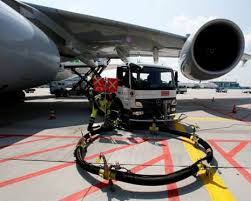
An airline CEO has warned that several airports are already facing jet fuel shortages, as industry experts estimate that up to 85,000 flights could be cancelled within a month if the crisis continues ahead of the World Cup.
The warning comes just days after Nigerian singer Davido complained that a lack of jet fuel disrupted his travel plans and caused him to miss a scheduled performance.
Carsten Spohr, CEO of German airline Lufthansa, revealed that one of the company’s passenger aircraft was unable to refuel after landing in Cape Town, South Africa, last week because of fuel shortages. The plane reportedly had to fly nearly 900 miles to Namibia to refuel before returning to its intended route.
Spohr said the aviation industry is preparing for possible disruptions if the situation worsens.
“If you cannot reach your target airport with the fuel that you’ve got, then you have to do refuelling stops. We are not there yet, but we are preparing for this,” he said.
Francois-Joseph Schichan, head of Flint Global’s Geopolitics practice, warned that uncertainty surrounding jet fuel supplies could affect fans planning to travel to North America for the World Cup.
According to him, while flights to the United States, Mexico, and Canada remain highly profitable and are therefore less likely to be cancelled, ongoing uncertainty could discourage some supporters from making travel plans.
Aviation analytics company Cirium reported that airlines worldwide have already removed about two million seats from May schedules over the past two weeks. Experts fear the situation could deteriorate further, with as many as 10 percent of flights potentially at risk in June if fuel shortages persist.
That scenario could lead to around 85,000 cancelled flights globally.
Paul Charles, CEO of travel consultancy The PC Agency, said airlines are already reducing flight schedules as jet fuel becomes increasingly difficult to secure.
“Airlines are now being forced to cut flights and make difficult decisions ahead of the peak season,” Charles said. “It is better for them to cancel flights well in advance so passengers face less disruption than with last-minute changes.”
He added that if geopolitical tensions, including the Iran conflict, continue to put pressure on fuel supplies, airlines may have no choice but to reduce operations further.
Charles noted that the impact will vary depending on the airline and market, but said carriers are preparing for a prolonged period of fuel shortages and potential worst-case scenarios.
Last week, UK Prime Minister Sir Keir Starmer also suggested that British travellers may need to reconsider their holiday plans amid the growing uncertainty.