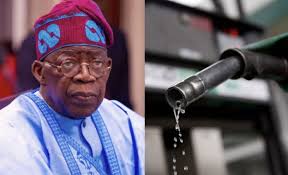
President Bola Tinubu has defended his administration’s decision to remove fuel subsidies, stating that the move saved Nigeria from economic collapse and helped steer the country away from bankruptcy.
Speaking on Friday, May 29, while hosting state governors at his Ikoyi residence in Lagos during Sallah celebrations and events marking the third anniversary of his administration, Tinubu said the policy, though controversial, was necessary to stabilize the nation’s finances.
“It was challenging at the time, but we survived. We faced litigation and accusations. We survived them. Instead of bankruptcy, Nigeria has survived. The economy has recovered. It is growing. Agriculture is booming,” the President said.
Tinubu’s remarks were contained in a statement issued by his Special Adviser on Information and Strategy, Bayo Onanuga, titled ‘Fuel Subsidy Removal Saved Nigeria From Bankruptcy, Says President Tinubu.’
The meeting was attended by governors from Lagos, Ogun, Enugu, Delta, Edo, Ondo, Ekiti, Niger, Sokoto, Kebbi, Jigawa, Nasarawa, Taraba, Adamawa, Benue and Kogi states, as well as deputy governors from Borno and Kano.
According to the President, the fuel subsidy regime had become a major drain on national resources while benefiting only a limited number of people. He argued that reforms introduced across key sectors, including infrastructure, agriculture, social investment, foreign exchange management and fiscal policy, were beginning to yield positive results and restore investor confidence.
“I’m glad governors are no longer borrowing from the federal government and asking for interventions to survive or pay salaries. You kept hope alive and encouraged our people to remain patient through three years of painful but necessary reforms as we reset the economy. Today, the benefits are becoming evident,” Tinubu said.
He noted that macroeconomic indicators were improving, abandoned infrastructure projects were being revived, and investment in housing and agriculture was gaining momentum.
“The housing industry is coming on very well. Agriculture will prosper again. We will achieve food sovereignty if we effectively utilise the vast land resources available in your various states,” he added.
Tinubu also highlighted the development potential of the Sokoto–Badagry highway corridor, citing opportunities for irrigation, electricity generation and agricultural expansion.
“Imagine how many dams can be developed along that corridor for irrigation, farming and power generation. Many of you have helped sustain public confidence in this government, and I appreciate your support,” he said.
Vice President Kashim Shettima praised the administration’s reform agenda, describing it as a bold effort to address longstanding structural challenges facing the country.
“You did not come to power in a season of ease. You inherited a system that required rebuilding from its foundations. Rather than postponing difficult decisions, you confronted the contradictions that have held the country back for decades,” Shettima said.
He added that the administration had embarked on the difficult task of repositioning the nation for long-term growth and stability.
“What you have done is more than governing; it is the re-engineering of a nation. Reform is not a banquet or a picnic—it is a battlefield and a commitment to future generations,” the Vice President stated.
Chairman of the Nigeria Governors’ Forum and Governor of Kwara State, AbdulRahman AbdulRazaq, said the reforms had significantly strengthened state finances.
He noted that many states had reduced their dependence on loans and bond issuances as a result of improved revenues.
“When the subsidy was removed, many Nigerians were surprised by the boldness of the decision. Today, however, the benefits are becoming clear. States that once relied heavily on borrowing are now reducing their debt burdens and improving fiscal sustainability,” AbdulRazaq said.
Imo State Governor Hope Uzodinma also commended the President, saying governors had reviewed the administration’s performance and were satisfied with its progress.
“We are among the frontline beneficiaries of the innovative governance approach introduced by this administration. Nigeria has moved from the brink of collapse to a position of stability and survival. Having assessed your performance, Mr President, we are pleased with the progress made so far,” Uzodinma said.
Lagos State Governor Babajide Sanwo-Olu was also among those present at the gathering.