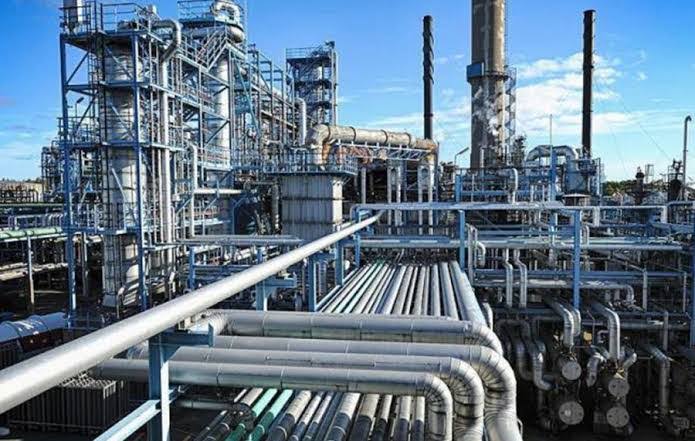
Nigeria plans to channel all of its crude oil production to domestic refineries by 2030 as the country continues to expand its refining capacity, the Nigerian Midstream and Downstream Petroleum Regulatory Authority (NMDPRA) has said.
According to S&P Global, Nigeria produced about 1.74 million barrels of crude oil per day in June and is targeting production of 3 million barrels per day by 2030.
For decades, Nigeria has exported a significant portion of its crude to refineries in Europe and Asia. However, the Federal Government is now prioritising domestic refining as part of efforts to improve energy security, reduce dependence on imported petroleum products and increase national revenue.
The NMDPRA said Nigeria currently has an estimated domestic refining capacity of 1.12 million barrels per day. The authority added that it is working with the Nigerian Upstream Petroleum Regulatory Commission (NUPRC) to enforce existing laws requiring crude producers to supply local refineries.
NMDPRA Chief Executive Officer, Rabiu Umar, said the Dangote Refinery is playing a major role in expanding the country’s refining capacity, particularly with its plan to increase processing capacity to 1.4 million barrels per day.
Umar said the regulator was also working to resolve crude supply challenges affecting domestic refineries and ensure compliance with the Domestic Crude Supply Obligation (DCSO) established under the Petroleum Industry Act (PIA).
“The Federal Government wishes to end the pattern where much of the country’s crude volumes are exported and refined products imported,” Umar said.
He added that the government was engaging the NUPRC to ensure that the entire 3 million barrels per day of crude production targeted for the coming years would be refined locally.
Data released by the NUPRC on August 10 showed that Nigerian crude producers supplied 53.7 million barrels to domestic refineries during the second quarter of 2026.
Of the total volume, 52.6 million barrels were delivered to the Dangote Refinery. The NUPRC said the refinery had initially been offered 68.1 million barrels, a volume that would have fully covered its crude requirements.
S&P Global reported that the Dangote Refinery, which supplies up to 90 percent of Nigeria’s refined petroleum products, has previously identified the availability of adequate and reliable crude supplies as a major challenge.
The refinery has consequently turned to international crude markets to supplement local supplies and support its operations and planned expansion.
According to S&P Global, the state-owned Nigerian National Petroleum Company (NNPC) was initially expected to provide most of the crude required by the refinery. However, its ability to meet those commitments was limited following the refinery’s commissioning in 2024 due to the company’s existing forward-selling agreements.
The Petroleum Industry Act, enacted in 2021, gives the NUPRC the authority to impose Domestic Crude Supply Obligations on upstream operators and licensees. The law also empowers the regulator to determine the proportion of crude oil and condensate production that must be allocated for domestic sale.
A NUPRC spokesperson told Platts, the pricing and news division of S&P Global Energy, that discussions were ongoing with relevant government agencies regarding enforcement of the provision.
“We have been holding meetings involving the NMDPRA, Ministry of Finance, and crude suppliers on the enforcement of this provision of the law,” the spokesperson said.
Earlier in May, the NUPRC disclosed that upstream producers had offered 68.7 million barrels of crude to domestic refiners during the first quarter of 2026.
However, less than half of the offered volume was eventually delivered. The commission attributed the shortfall to pricing disagreements between crude producers and domestic refineries.