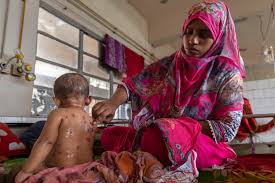
Bangladesh is experiencing a surge in suspected measles cases, with officials reporting that at least 98 children may have died over the past three weeks as authorities ramp up vaccination efforts.
Data from the health ministry indicates that 6,476 children between six months and five years old have shown symptoms consistent with measles—a sharp rise compared to previous years. “Compared with past years, the number of affected children is higher, and the death toll is higher too,” said Halimur Rashid, a director at Communicable Disease Control.
Although 826 cases have been officially confirmed, with 16 recorded deaths, experts warn the true figures may be significantly higher due to limited testing and cases where children die before receiving a diagnosis.
Officials attribute the outbreak to several factors, including vaccine shortages and gaps in immunisation programmes. Rashid described the situation as driven by “multifactorial causes, including a shortage of vaccines.”
Bangladesh had previously made strong progress in controlling measles, but a planned 2024 vaccination campaign was disrupted by political unrest that led to the removal of Sheikh Hasina. Public health experts say the effects of those disruptions are now becoming evident.
Mahmudur Rahman, head of the National Verification Committee of Measles and Rubella, acknowledged that targets were not met. “We committed to reducing the number to zero by December 2025 but failed to achieve the target due to poor vaccination programmes,” he said.
Authorities have identified 30 of the most affected areas and launched an emergency vaccination campaign, beginning with the hardest-hit regions before expanding nationwide. Health Minister Sardar Shakhawat Hossain Bakul said the effort would prioritise areas recording the highest number of cases.
Experts have also raised concerns about procurement failures. Public health specialist Tajul Islam A Bari warned that although funding was available, vaccines were not secured in time. “Now we see the result—the situation is scary,” he said.
Measles is highly contagious and spreads through coughing and sneezing. It primarily affects young children and can lead to serious complications, including respiratory problems and brain inflammation.
The World Health Organization estimates that tens of thousands of children die from measles each year globally, particularly in regions with low vaccination coverage.