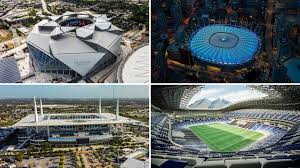
As the 2026 FIFA World Cup approaches, excitement is building steadily across the globe. This historic edition will be jointly hosted by the United States, Canada, and Mexico, and will be the first tournament to feature an expanded 48-team format.
Matches will take place across 16 host cities, showcasing some of the most advanced and impressive stadiums ever used for a global sporting event. With 104 matches scheduled, teams will compete in a wide range of environments and climates, adding another layer of challenge to the competition.
Below is the complete lineup of stadiums selected to host the 2026 FIFA World Cup, each offering a unique atmosphere and identity.
UNITED STATES
The United States will stage the majority of matches, including the final, across 11 venues.
- New York/New Jersey
Host Stadium: MetLife Stadium (New York New Jersey Stadium)
Capacity: 82,500
A premier venue known for hosting major events like the Super Bowl and international soccer matches. It will host the final on July 19, 2026. - Dallas (Arlington, Texas)
Host Stadium: AT&T Stadium (Dallas Stadium)
Capacity: 94,000
The largest stadium in the tournament, featuring a retractable roof and a massive HD video screen. Expected to host a semi-final. - Atlanta
Host Stadium: Mercedes-Benz Stadium (Atlanta Stadium)
Capacity: 75,000
Famous for its retractable “pinwheel” roof and 360-degree video board, regularly hosting major sporting events. - Los Angeles (Inglewood, California)
Host Stadium: SoFi Stadium (Los Angeles Stadium)
Capacity: 70,000
A cutting-edge venue with an indoor-outdoor design. It will host the United States’ opening match on June 12. - Seattle
Host Stadium: Lumen Field (Seattle Stadium)
Capacity: 69,000
Renowned for its intense atmosphere and passionate fanbase, making it one of the loudest stadiums. - Boston (Foxborough, Massachusetts)
Host Stadium: Gillette Stadium (Boston Stadium)
Capacity: 65,000
Recently renovated with modern features, including a large video board and a signature lighthouse structure. - Philadelphia
Host Stadium: Lincoln Financial Field (Philadelphia Stadium)
Capacity: 69,000
Known for its energetic crowd and history of hosting international tournaments. - Kansas City
Host Stadium: Arrowhead Stadium (Kansas City Stadium)
Capacity: 73,000
Holds the record for one of the loudest stadiums, offering a vibrant matchday atmosphere. - Miami (Miami Gardens, Florida)
Host Stadium: Hard Rock Stadium (Miami Stadium)
Capacity: 65,000
A global sports venue set to host the third-place playoff match. - Houston
Host Stadium: NRG Stadium (Houston Stadium)
Capacity: 72,000
Features a retractable roof, ensuring comfortable playing conditions. - San Francisco Bay Area (Santa Clara, California)
Host Stadium: Levi’s Stadium (San Francisco Bay Area Stadium)
Capacity: 71,000
A modern, eco-friendly venue known for hosting major global events.
MEXICO
- Mexico City
Host Stadium: Estadio Azteca (Mexico City Stadium)
Capacity: 83,000
A legendary football venue that will become the first to host matches in three different World Cups. It will stage the opening match on June 11. - Guadalajara (Zapopan)
Host Stadium: Estadio Akron (Estadio Guadalajara)
Capacity: 48,000
Recognized for its distinctive, volcano-inspired design. - Monterrey (Guadalupe)
Host Stadium: Estadio BBVA (Estadio Monterrey)
Capacity: 53,500
Nicknamed “The Steel Giant,” it offers scenic mountain views alongside world-class facilities.
CANADA
- Vancouver
Host Stadium: BC Place (BC Place Vancouver)
Capacity: 54,000
A landmark venue with a retractable roof, previously used in the 2010 Winter Olympics. - Toronto
Host Stadium: BMO Field (Toronto Stadium)
Capacity: 45,000
Recently expanded to meet FIFA standards and will host Canada’s opening match on June 12.
These venues will collectively define the stage for what promises to be one of the most expansive and exciting FIFA World Cups in history.