US President Donald Trump has defended his newly signed agreement with Iran, dismissing critics who argue that the deal grants too many concessions to Tehran as “fools.”
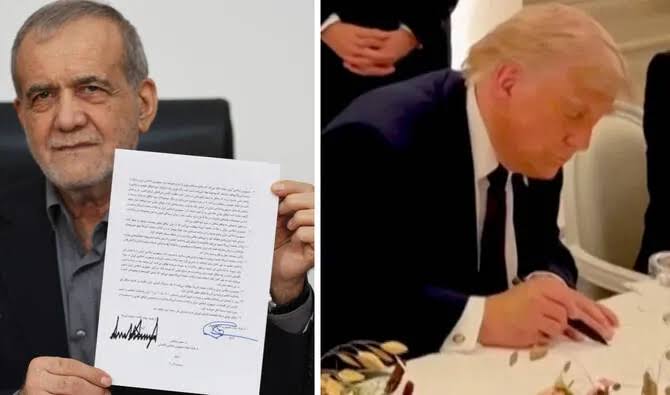
The agreement, signed by Trump and Iranian President Masoud Pezeshkian, is designed to end the recent conflict, reopen the Strait of Hormuz, and establish a framework for further negotiations over Iran’s nuclear programme.
Speaking after the signing ceremony in France, Trump said the deal was already delivering positive economic results, citing strong stock market performance and lower oil prices. He accused opponents of ignoring the benefits of the agreement and claimed their criticism was driven by political motives rather than facts.
The accord is expected to bring an end to hostilities involving the United States, Israel and Iran, while restoring normal shipping operations through the Strait of Hormuz, a critical route for global energy supplies. It also launches a 60-day negotiation period aimed at securing a broader agreement on Iran’s nuclear activities.
As part of the arrangement, the United States will ease certain sanctions on Iranian oil exports while discussions continue on a possible reconstruction fund reportedly worth hundreds of billions of dollars. The International Atomic Energy Agency (IAEA) has also expressed its willingness to oversee measures related to Iran’s enriched uranium stockpiles.
French President Emmanuel Macron welcomed the agreement, describing it as a significant step toward peace and stability in the region. Iranian officials also praised the deal, with President Pezeshkian calling it “historic” and stressing that attention should now turn to implementing its provisions.
Despite the optimism, the agreement has drawn criticism from some American lawmakers and foreign policy analysts who contend that it does not sufficiently curb Iran’s nuclear ambitions. Republican Senator Bill Cassidy described the deal as one of the worst foreign policy mistakes in decades, arguing that Iran had secured major benefits without offering enough in return.
Iranian officials, however, maintained that the country’s ballistic missile programme remains off the table in any future negotiations, insisting that Iran’s defence capabilities are not open to compromise.
Attention now shifts to upcoming talks in Switzerland, where negotiators will seek to reach a long-term agreement on Iran’s nuclear programme and wider regional security concerns. Global oil markets responded positively to the announcement, with prices falling as fears of disruptions to energy supplies eased.