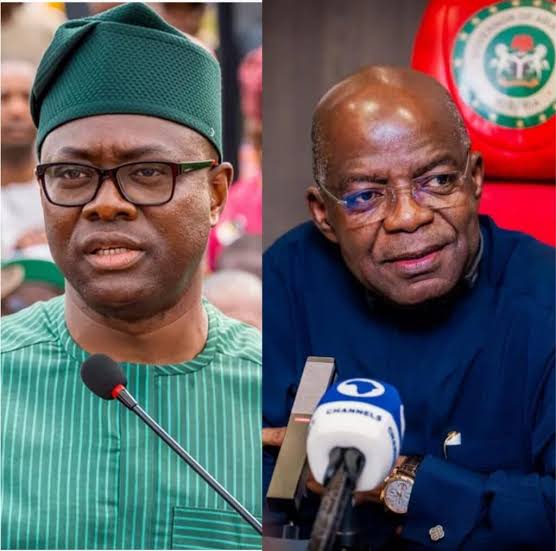
The Allied Peoples Movement (APM) and its presidential candidate, Seyi Makinde, have filed a lawsuit challenging the N200 million campaign advertising permit fee imposed on presidential candidates by the Abia State Government.
The suit, marked HU/214/2026, was filed at the Abia State High Court in Umuahia. Governor Alex Otti, the state Attorney-General, the Abia State Signage and Advertisement Agency and the Abia State House of Assembly are listed as defendants.
Under the fee schedule announced by the signage agency, presidential candidates are required to pay N200 million for campaign advertising permits, while governorship candidates are charged N150 million. Senatorial candidates are required to pay N100 million, House of Representatives candidates N50 million and State House of Assembly candidates N20 million.
Makinde and the APM are challenging the legality of the fees, arguing that the regulations conflict with provisions of the 1999 Constitution and the Electoral Act 2026.
Through their lawyer, Musibau Adetunbi, SAN, the plaintiffs raised six questions for determination and are seeking eight reliefs from the court.
Among their requests is an order setting aside the regulations governing political campaign advertising, including the N200 million fee imposed on presidential candidates.
They are also seeking an injunction restraining the defendants, their agents and representatives from enforcing the fee or removing, defacing, destroying or obstructing their campaign billboards and other outdoor advertisements in Abia State.
The plaintiffs cited provisions of the Constitution and Sections 92 and 99 of the Electoral Act 2026, arguing that the N200 million charge is invalid. They contend that electoral law prohibits state institutions or regulatory bodies from being used in a manner that gives an advantage or disadvantage to any political party or candidate.
Makinde and the APM further argue that the Constitution and Electoral Act vest the Independent National Electoral Commission (INEC) with powers to regulate political campaigns and that state regulations cannot override federal electoral legislation.
While acknowledging that state authorities have powers to regulate outdoor advertising, the plaintiffs argue that such powers should not be exercised in a manner that restricts a presidential candidate’s ability to campaign.
They also cited Section 92 of the Electoral Act 2026, which sets a N10 billion limit on campaign expenditure by a presidential candidate.
According to the plaintiffs, paying N200 million for an advertising permit in a single state could place significant pressure on the statutory campaign spending limit if similar fees were imposed across the country.
They further relied on Sections 1(3) and 4(5) of the Constitution, arguing that any state law or administrative regulation that conflicts with valid federal legislation is void to the extent of the inconsistency.
The plaintiffs are asking the court to intervene, arguing that enforcement of the fee could restrict Makinde’s ability to campaign and affect what they describe as a level playing field for candidates and political parties.
The Abia State Government has previously defended the campaign advertising fee structure, saying it is based on state laws regulating signage and outdoor advertising.
The court has yet to determine the merits of the plaintiffs’ arguments.