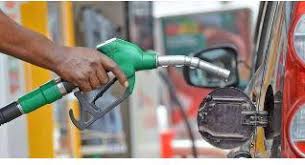
The Trade Union Congress of Nigeria (TUC) has warned that the price of Premium Motor Spirit (PMS), commonly known as petrol, could rise to nearly ₦2,000 per litre if urgent steps are not taken to address the impact of soaring global crude oil prices and the weakening naira.
Speaking to journalists on Thursday, April 9, TUC President Festus Osifo urged the Federal Government to act swiftly by allocating 60 percent of excess crude revenue above the 2026 budget benchmark to subsidise crude supply for the Dangote Refinery and other modular refineries. According to him, this measure could significantly reduce the prices of petrol, diesel, and aviation fuel within two weeks.
Osifo noted that petrol prices are already approaching ₦2,000 per litre in some parts of the country, worsening the economic strain on Nigerians. He explained that the rising cost of fuel is driving up transportation and production expenses, which in turn leads to higher prices for goods and services.
He warned that if the situation persists, it could reverse the recent decline in inflation, pushing it upward again.
Outlining his proposal, Osifo said the 2026 budget benchmark for crude oil was set at $64.85 per barrel, while current global prices hover around $100 per barrel due to tensions in the Middle East and disruptions such as the blockade of the Strait of Hormuz. This, he said, leaves the government with an excess of about $35 per barrel.
He recommended that at least 60 percent of this surplus—roughly $20 per barrel—be used to subsidise crude supplied to local refineries, particularly those producing diesel.
Osifo argued that subsidising crude at the production stage would be more effective than subsidising finished products, as it reduces the risk of diversion and misuse that plagued previous subsidy regimes.
He added that such an approach would quickly bring down fuel prices, expressing confidence that the cost of petrol, diesel, and jet fuel could drop within one to two weeks if implemented.