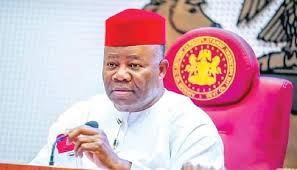
Senate President Godswill Akpabio has made it clear that the National Assembly will not allow the disruptive actions of any single member to derail its proceedings. He emphasized that upholding Senate rules is crucial to maintaining Nigeria’s democratic values.
In a statement released on Saturday, October 11, by his media aide Eseme Eyiboh, and titled “The Trials and Triumphs of a Resilient Nigeria’s 10th Senate,” Akpabio defended the Senate’s disciplinary actions, stating they are not aimed at silencing dissent but at preserving order and the dignity of the institution.
His remarks come amid an ongoing dispute with Senator Natasha Akpoti-Uduaghan (Kogi Central), who recently resumed duties after a six-month suspension and continues to question the legality of that sanction.
“The Senate cannot and will not be held hostage by the disruptive instincts of any of its members,” Akpabio said. “Democracy can only function when its institutions are respected and its rules followed. Parliamentary discipline is a universal hallmark of political maturity.”
He referenced practices in established democracies, particularly the UK’s House of Commons, where the Speaker’s authority is regarded as final and cannot be openly challenged without consequences.
Akpabio underscored that Nigeria’s Standing Orders are not symbolic, but essential tools for ensuring fairness and consistency. “They represent the living constitution of the Senate and are vital to the integrity of the legislative process,” he noted.
He also stressed that enforcing discipline is common in respected parliaments around the world, where members can be suspended or expelled for conduct that undermines institutional order. “Nigeria’s Senate has every right to uphold similar standards,” he asserted.
Describing the 10th Senate as a “chamber of resilience and balance,” Akpabio said the legislature is committed to safeguarding both freedom and order—key elements of any true democracy.
“When the Senate insists it won’t be held hostage by the disruptive behavior of any one member, it’s reaffirming the principle of collective responsibility over personal theatrics,” he said. “Strong legislatures thrive not by suppressing dissent, but by ensuring dissent operates within the bounds of procedure.”
Akpabio added that his leadership blends firmness with inclusivity, aiming to keep the Senate a stabilizing force in an era of rising populism and public skepticism.
“Real leadership doesn’t chase applause—it builds stability,” he concluded. “By upholding our rules, we protect not only the Senate’s integrity but the foundations of our democracy.”