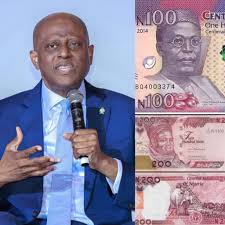
The Central Bank of Nigeria (CBN) has said the increasing adoption of digital payment channels is a major reason lower-denomination naira notes have become scarce in circulation.
Speaking after the Monetary Policy Committee (MPC) meeting in Abuja, CBN Governor Olayemi Cardoso dismissed speculation that the N100 and N200 notes had been withdrawn, stressing that they remain legal tender.
“Yes, they remain legal tender. Unless the central bank states otherwise, Nigerians should assume that all existing denominations remain legal tender,” he said.
Cardoso explained that the growing preference for electronic payments has reduced demand for lower-value notes and coins, making it unnecessary for the apex bank to print and circulate them in large volumes.
“As more people adopt digital payment channels, the demand for coins and lower-denomination notes naturally declines. If there is less demand for them, there is less need to print and circulate them in large quantities,” he said.
He also pointed to inflation and the weakening purchasing power of lower-value denominations as factors behind their declining use in everyday transactions.
“Of course, we must also acknowledge that currency devaluation has affected the purchasing power of lower-value notes. That is a reality,” Cardoso added.
On inflation, the CBN governor reaffirmed the bank’s commitment to achieving single-digit inflation, despite external economic shocks that have slowed progress.
“We recorded 11 consecutive months of disinflation. Unfortunately, we have experienced external shocks that were not anticipated. As for our single-digit inflation target, we remain committed to it,” he said.
Responding to the International Monetary Fund’s (IMF) view that the naira is undervalued, Cardoso maintained that the exchange rate should be driven by market forces rather than a fixed target.
“We will continue to ensure that Nigeria has a foreign exchange market that is transparent, liquid and based on a willing-buyer, willing-seller framework,” he said.
He added that the CBN is encouraged by developments in the foreign exchange market, noting that daily turnover has surpassed $1 billion on some occasions, a sign of improving investor confidence.