 Amebo Nation
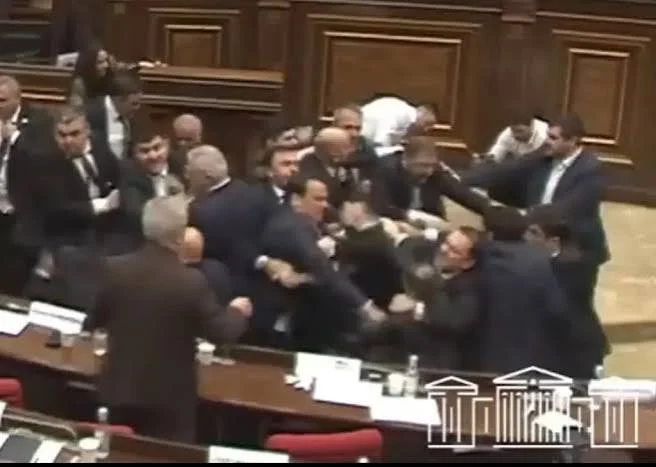
A heated parliamentary debate in Armenia descended into physical violence after lawmakers clashed over a controversial proposal to establish a “Ministry of Marital Relations” aimed at addressing declining birth rates and improving domestic satisfaction.
The confrontation erupted in the National Assembly during a debate involving members of the ruling Civil Contract party and the opposition Strong Armenia party.
Tensions reportedly escalated after a ruling party lawmaker criticised the opposition’s unusual policy proposal and demanded an apology over what he described as its inappropriate characterisation of citizens.
The disagreement soon turned physical, with lawmakers reportedly exchanging punches and throwing objects across the parliamentary chamber.
The chaotic proceedings forced a temporary suspension of the session as security personnel intervened to separate the feuding politicians and restore order.
The controversial proposal had earlier attracted attention after an opposition figure defended the idea as a potential solution to Armenia’s demographic challenges.
“Can we now actually say that in a strong Armenia there will be no unsatisfied women?” the opposition figure had asked while explaining the concept.
The opposition party argued that improving marital relationships, addressing domestic dissatisfaction and promoting personal fulfilment could contribute to population growth.
Reacting to the parliamentary clash, the opposition leader appeared to celebrate the confrontation, saying: “People who had been getting on our nerves for months got it right in the mouth – and got it good.”
However, lawmakers from the ruling coalition condemned the violence, insisting that the proposal was inappropriate and that parliamentary proceedings should be conducted with decorum.
Defending the actions of his colleagues, a ruling party lawmaker reportedly said: “It won’t work to provoke a fight and escape from the National Assembly session hall without getting beaten.”
The incident highlights growing tensions between Armenia’s political factions, with disagreements over policy proposals and parliamentary conduct increasingly spilling into confrontations on the legislative floor.