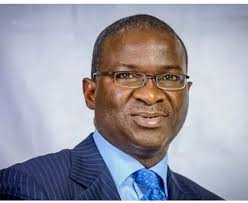
Former Lagos State Governor, Babatunde Fashola, has revealed that he never received security votes during his eight-year tenure as governor of the state.
Fashola, who later served as Minister of Works, Power and Housing under the administration of former President Muhammadu Buhari, made the disclosure on Friday while speaking at a panel session organised to commemorate Nigeria’s Democracy Day.
Responding to a question on the impact of security votes allocated to governors amid the country’s growing security challenges, Fashola said he could only speak from his experience in Lagos State, where he maintained that no such arrangement existed during his administration.
According to him, all government expenditures and acquisitions were managed through the state’s Ministry of Budget and Economic Planning.
“Whenever I hear some of my colleagues talk about security votes, I honestly do not know what they mean because I never had such in Lagos,” Fashola said.
“I can only speak about what I know. I was governor of Lagos State and there was no security vote. All our acquisitions were domiciled in the Ministry of Budget and Planning. So when people say governors received security votes, I do not know where they were getting them from. I certainly did not receive any.”
The former governor, however, stressed that governors cannot evade their constitutional responsibility as chief security officers of their states.
“The Constitution designates governors as chief security officers, and we cannot walk away from that responsibility. I accepted it fully and worked with my team to make Lagos safer,” he said.
Fashola recalled that his administration held monthly security meetings on the first Wednesday of every month throughout his eight years in office, noting that he never missed a single session.
He explained that the state relied heavily on data collection and analysis to tackle crime, while also establishing the Lagos State Security Trust Fund to support security operations.
According to him, the fund was financed through contributions from individuals and organisations, with its accounts and assets subjected to regular audits.
“Every year, we met with Lagosians at town hall meetings to explain how resources were being utilised and to present data showing trends in criminal activities and the progress we were making,” he said.
Fashola noted that Lagos faced severe security challenges when he assumed office, recalling that armed robbery incidents were once a daily occurrence across the state.
“We started from a very poor position. Those who lived in Lagos at the time will remember that if there were only three successful armed robberies in a week, it was considered a good week because attacks happened almost every day,” he said.
He further argued that the fight against crime was not won solely through the deployment of security personnel and weapons but through strategic policies and reforms.
Fashola highlighted Lagos State’s early adoption of the Central Bank of Nigeria’s cashless policy under former CBN Governor Sanusi Lamido Sanusi, describing it as one of the measures that helped reduce crime.
According to him, reducing the amount of cash in circulation made homes and businesses less attractive targets for criminals, contributing significantly to improved security across the state.