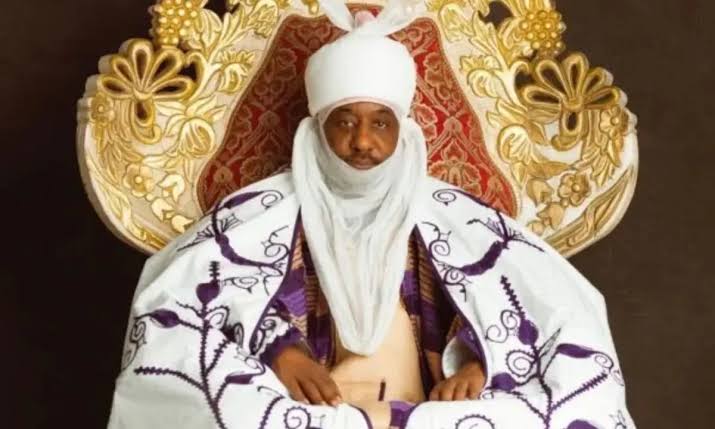
The Emir of Kano and former Governor of the Central Bank of Nigeria (CBN), Sanusi Lamido Sanusi, has said that his experience as a traditional ruler revealed to him the true scale of poverty in Nigeria—something he had not fully grasped during his time in government or finance.
Speaking in Abuja on Saturday, May 31, at a public lecture marking the 60th birthday of former Rivers State Governor Rotimi Amaechi, Sanusi shared that it was only after becoming Emir that he came face to face with the everyday struggles of ordinary Nigerians. The lecture was themed *“Weaponization of Poverty as a Means of Underdevelopment: A Case Study of Nigeria.”*
“Many of the elite in Nigeria do not know what poverty really is,” Sanusi said. “As an economist and a former CBN governor, I saw the numbers. But I didn’t truly understand poverty until I became Emir.”
He recounted visiting rural communities where people live in dire conditions—drinking unsafe water, sleeping in inadequate shelters, and attending school in roofless two-block classrooms. “You see how people live, and you begin to question our priorities. Do we really love the people, or do we just love ruling over them?” he asked. “We build overhead bridges and underpasses in the cities, yet in the villages, people can’t access basic healthcare.”
Sanusi urged Nigerian leaders to shift focus from self-serving infrastructure in urban centers to meaningful investments in the welfare of the rural poor. “We are in a crisis,” he said. “Our attention should be on how to get out of it—not just maintaining power.”
Also speaking at the event, former Kaduna State Governor Nasir El-Rufai criticized Nigeria’s recurring pattern of electing leaders who are more interested in power than governance. “We keep electing people who know how to win elections but not how to lead,” he said.
Adding his voice, Prof. Usman Yusuf, former Executive Secretary of the National Health Insurance Scheme, noted that many of the challenges people present at hospitals are rooted in poverty, not illness. He blamed systemic corruption and poor governance for widespread hardship, warning that unless Nigerians become more intentional in choosing competent leaders, the cycle of underdevelopment will continue.