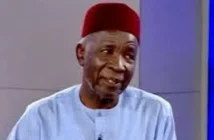
Former Vice President Atiku Abubakar has criticised President Bola Ahmed Tinubu’s plan to reduce transportation costs across Nigeria, describing the initiative as “not policy innovation” but “panic dressed in presidential grammar.”
The reaction followed Tinubu’s announcement that state governors had agreed to leverage Compressed Natural Gas (CNG) and electric vehicles to reduce intra-state transport fares from October 1.
The initiative comes amid an ongoing debate over fuel subsidies. Atiku had proposed replacing the current system with a production-focused subsidy framework aimed at supporting domestic crude oil refiners, but the Presidency dismissed the proposal as a demonstration of economic ignorance.
Reacting through his Senior Special Assistant on Public Communication, Phrank Shaibu, Atiku described the government’s new commitment to cheaper transportation as “a confession extracted by failure and forced by Atiku’s argument.”
“For more than three years, this government told Nigerians that hunger was reform, that collapsing purchasing power was sacrifice, and that ruinous fuel prices were the unavoidable price of progress,” Shaibu said.
He argued that Atiku had already presented an alternative approach aimed at lowering fuel costs and protecting household purchasing power, accusing the administration of subsequently adopting a similar approach after initially rejecting it.
“The bus driver knew it. The market woman knew it. The farmer knew it. Atiku knew it and built a policy around it. Tinubu mocked the idea. Now that Nigerians are rallying around Atiku’s cost-of-living message, the government is scrambling to borrow the logic it once condemned,” he said.
Shaibu also cautioned Nigerians against being distracted by what he described as “another festival of committees, conversion statistics and October promises,” arguing that converting 120,000 vehicles to CNG would not be enough to address the economic challenges facing more than 200 million Nigerians.
“Atiku’s point has always been simple: you do not fight poverty by making the basic energy that moves food, workers and commerce unaffordable,” Shaibu added.
“CNG is useful, but it cannot become an alibi for three years of economic punishment. You cannot burn down the family budget, arrive with a conversion kit and demand applause for compassion.”