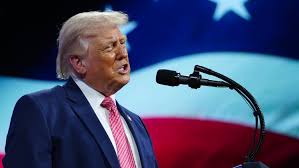
Donald Trump is pushing for $1.5 trillion in defense spending in the White House’s proposed fiscal 2027 budget, marking an increase of about 40 percent compared to 2026 levels.
According to the proposal released on Friday, March 3, $1.1 trillion would be allocated directly to the United States Department of Defense, while an additional $350 billion would be sought through Congress’s budget reconciliation process for key priorities such as munitions production and expanding the defense industrial base. The plan also references the president’s proposed “Golden Dome” missile defense system.
The request, prepared by White House budget chief Russell Vought, comes as the United States enters the fifth week of its conflict with Iran. Although Trump has suggested the war could end within weeks, the budget underscores a longer-term push to strengthen U.S. military capabilities.
Trump had first floated the $1.5 trillion defense figure in January, describing it as necessary to build what he called a “Dream Military” and to serve the country’s interests.
Defense Secretary Pete Hegseth also said the proposed spending would send a strong signal globally.
Beyond defense, the budget calls for a 13 percent increase for the United States Department of Justice, reflecting the administration’s focus on tough-on-crime policies.
At the same time, it proposes a 10 percent cut—about $73 billion—to nondefense spending, targeting programs related to housing, community development, environmental protection, and healthcare, while shifting some responsibilities back to state and local governments.
The plan also includes a $10 billion mandatory fund to establish a “Presidential Capital Stewardship Program” within the National Park Service, aimed at improving safety, accessibility, and the preservation of historic landmarks in the nation’s capital.
In addition, the administration is seeking to boost aviation safety, proposing a $481 million funding increase for the Federal Aviation Administration following last year’s fatal midair collision involving an American Airlines flight and a Black Hawk helicopter.
The budget also outlines plans to redirect funds from the Infrastructure Investment and Jobs Act toward strengthening U.S. energy production, expanding critical mineral output, and enhancing nuclear security.