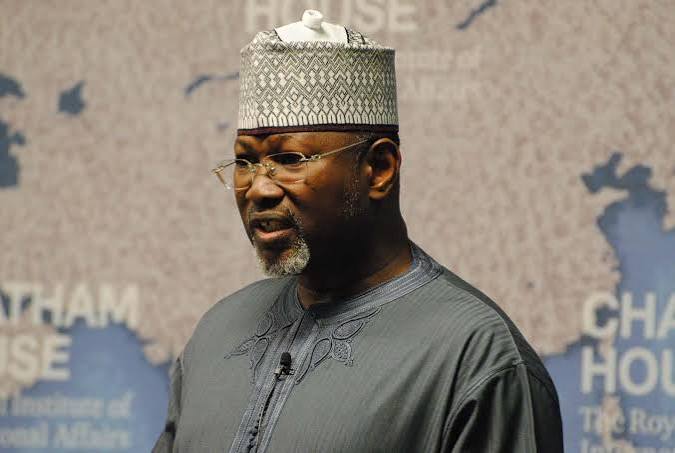
Former Chairman of the Independent National Electoral Commission (INEC), Attahiru Jega, has urged the National Assembly to urgently amend key provisions of the Electoral Act, 2026, warning that certain sections could weaken the credibility of the 2027 general elections if left unchanged.
Jega made the call while delivering a paper titled “Some Reflections on the 2026 Electoral Act and Nigeria’s Electoral Democracy” in Abuja.
Although he commended the Act for introducing reforms aimed at strengthening the electoral process, Jega said several provisions remain problematic and require immediate review to eliminate ambiguities and safeguard electoral integrity.
He specifically identified Section 60(3), which governs the electronic transmission of election results, Section 83(5), which limits judicial intervention in the internal affairs of political parties, and Section 138(1), which removes qualification as a ground for challenging election results, as areas requiring urgent legislative attention.
Jega praised the law for making electronic transmission of election results mandatory but expressed concern over the provision that allows manual result sheets (Form EC8A) to become the primary basis for collation whenever electronic transmission fails.
“Considering the Nigerian environment and the desperation of ‘do-or-die’ politicians, such a vague provision should not exist because it can easily be exploited to abandon electronic transmission in favour of manual collation, which is more susceptible to manipulation and electoral fraud,” he said.
He also faulted what he described as an overreliance on the INEC Result Viewing Portal (IReV) in the event of transmission failures.
“Data uploaded to the IReV portal is meant for public viewing only. It should not be the basis for determining election results. The commission should instead rely on its secure backend result compilation database, which is less vulnerable to interference and not accessible to the public,” Jega stated.
On Section 83(5), Jega argued that completely preventing courts from hearing disputes relating to the internal affairs of political parties is too sweeping and could undermine constitutional rights.
According to him, the judiciary should retain the power to intervene in cases where the rule of law or fundamental rights are threatened.
He also criticised the removal of candidates’ qualifications as grounds for challenging election outcomes, noting that the 1999 Constitution prescribes minimum educational requirements for elective offices.
He argued that the provision served an important purpose under previous electoral laws and questioned the rationale behind its removal.
“It is a valuable provision that has been effectively utilised in the past, and there appears to be no reasonable justification for eliminating it, unless certificate fraudsters and qualification racketeers are to be given a free hand,” he said.
Jega urged lawmakers to ensure that any amendments to the Electoral Act are completed well ahead of the 2027 elections, in line with African Union and ECOWAS protocols, which recommend that electoral laws should not be altered within six months of a general election.
Beyond the immediate amendments, the former INEC chairman advocated wider electoral reforms designed to strengthen Nigeria’s democratic institutions.
He proposed changes to the appointment process for the INEC chairman and national commissioners, arguing that the power should no longer rest solely with the President.
Jega also recommended restructuring INEC by transferring responsibilities such as prosecuting electoral offenders, constituency delimitation and political party regulation to separate agencies, allowing the commission to focus exclusively on organising elections.
He further called for stricter registration requirements for political parties and lower campaign spending limits, saying the current financial thresholds have encouraged excessive monetisation of politics.
According to him, electoral reforms should be driven by broad national consultations involving lawmakers, government, political parties, civil society organisations and other stakeholders, with the primary objective of strengthening democratic governance.
“But reform measures must emerge from broad-based consultations as patriotic and selfless efforts by legislators, the government and all critical stakeholders, with a clear focus on improving electoral integrity and promoting sustainable participatory democracy,” he said.
Jega also expressed concern over what he described as misconduct within the judiciary, warning that the actions of some judges could erode public confidence in elections and the justice system.
“There are serious concerns arising from the judiciary, particularly acts of judicial rascality by some judges and justices, which undermine electoral integrity, democratic development and the credibility of the courts. The National Judicial Council must act swiftly to address these issues,” he said.
He concluded by stressing that while a sound legal framework is vital for credible elections, successful electoral reforms also depend on responsible political leadership, strong institutions and active citizen participation.
“All stakeholders must work together to create an enabling environment for the successful conduct of the 2027 general elections with integrity and to strengthen Nigeria’s democratic development,” Jega said.